
January 16, 2026
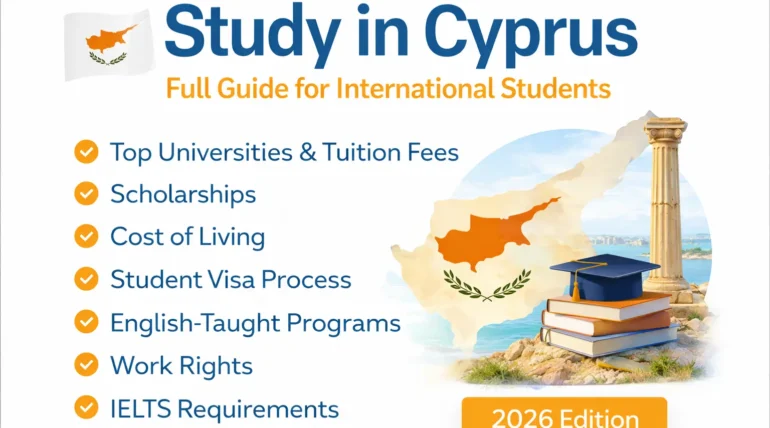
Study in Cyprus: Full Guide for International Students (2026)
Study in Cyprus is becoming an increasingly popular choice for international students who want affordable European education, English-taught programs, and globally recognised degrees. Cyprus offers EU-standard universities, reasonable tuition fees, simple admission processes, and legal part-time work options for students.
Why Study in Cyprus for International Students?
Top reasons students choose Cyprus
- EU education with ECTS credits (easy mobility and recognition).
- English-taught programmes in many universities (especially private universities).
- Affordable tuition compared to many EU destinations.
- Part-time work rights (with conditions) for non-EU students. (Migration and Home Affairs)
- Mediterranean lifestyle + strong international student communities.
Study in Cyprus attracts international students because of its high-quality education system, affordable tuition fees, simple admission process, and strong European academic recognition. Many students choose to study in Cyprus as it offers English-taught programs, safe living conditions, and legal part-time work opportunities.
Cyprus Education System (Quick Overview)
- Bachelor’s: usually 3–4 years
- Master’s: usually 1–2 years
- PhD: commonly 3+ years
- Academic structure generally follows ECTS and European standards (programme-specific). (University of Nicosia)
Top Universities to Study in Cyprus (Public + Popular Private)
Public Universities (high value for money)
- University of Cyprus (UCY) – strong research profile; well-ranked internationally. (University of Cyprus)
- Cyprus University of Technology (CUT) – public, located in Limassol. (Cyprus University of Technology)
Popular Private Universities (many English-taught options)
- University of Nicosia (UNIC) (wide international portfolio; tuition varies by programme) (University of Nicosia)
- European University Cyprus (EUC) (English-taught options; tuition varies) (European University Cyprus)
- Other colleges/universities also accept international students (always verify accreditation + programme details). (Mastersportal)
Programmes & Fields in Demand
Common high-demand areas in Cyprus include:
- Business, Management, Finance
- Computer Science / IT / Data
- Hospitality & Tourism
- Engineering & Technology
- Health-related programmes (varies by institution)
Tip: Choose based on programme accreditation, internships, language of instruction, and career outcomes, not just tuition.
Tuition Fees to Study in Cyprus(Realistic Ranges)
Tuition varies widely by public vs private, level, and nationality.
Public universities (example fees)
- CUT: non-EU students listed around €6,834/year (programme rules apply). (Cyprus University of Technology)
- University of Cyprus: non-European students listed around €6,834/year (as shown on UCY tuition page). (University of Cyprus)
Private universities (example fees)
- UCLan Cyprus (2025/26):
- Undergraduate: about €9,000/year (after bursary mentioned) (UCLan Cyprus)
- Postgraduate: about €9,500 total (after bursary mentioned) (UCLan Cyprus)
- UNIC tuition varies by programme and can be significantly higher for specialised degrees (example PDF shows pharmacy and doctoral pricing structures). (University of Nicosia)
Typical ranges (rough guide):
- Bachelor: ~€3,000 to €13,000/year (depends heavily on university/programme) (Britannica Overseas Education)
- Master’s: often ~€4,000 to €8,000/year in many cases, but can be higher in private/specialised programmes. (Mastersportal)
Cost of Living in Cyprus (Monthly Budget)
Your costs depend a lot on city (Nicosia vs Limassol vs Larnaca) and lifestyle.
Estimated monthly budget (typical student)
- Accommodation: €250–€600 (shared/student housing can reduce cost)
- Food & groceries: €150–€250
- Transport: €30–€80
- Utilities + internet: €50–€120 (if not included)
- Personal: €50–€150
Many guides estimate annual living costs roughly around €9,500–€11,500 (varies widely). (https://www.studies-overseas.com/)
Scholarships to Study in Cyprus
Scholarships are mostly university-based (merit/need/early application discounts).
- Private universities often provide bursaries/discounts (example: UCLan Cyprus bursary is referenced on their fees page). (UCLan Cyprus)
- Always check each university’s “Scholarships/Financial Aid” page and eligibility rules.
Common scholarship types
- Merit-based (GPA/academic profile)
- Early-bird discounts
- Alumni/sibling discounts (some institutions)
- Department-specific awards (limited seats)
IELTS / English Requirement (Is IELTS Mandatory?)
It depends on the university and your background.
- Many programmes accept IELTS/TOEFL/PTE.
- Some accept English Medium of Instruction (MOI) or internal placement tests.
- Requirements are programme-specific, so always confirm on the official programme page.
(If you want, tell me your target course + your last education medium, and I’ll suggest the most likely English options.)
Intakes & Application Deadlines (Cyprus)
Most universities commonly have:
- Fall intake: September/October
- Spring intake: January/February (not available for all programmes)
Deadlines vary by university, visa timeline, and seat availability. Start early because visa/entry procedures can take time.
Cyprus Student Visa (Non-EU) – Requirements & Process
Who needs a visa?
Non-EU students typically need a student entry visa/residence process to study in Cyprus. The EU portal notes permits are for full-time students. (Migration and Home Affairs)
To study in Cyprus, international students must apply for a Cyprus student visa after receiving an official offer letter from a recognised university.
Where to apply (India)
For Cyprus visa submission in India, VFS Global handles visa information and application guidance. (VFS Global)
Common document checklist (typical)
- University offer/acceptance letter
- Passport + photos
- Proof of funds + sponsor documents (if applicable)
- Accommodation proof
- Medical/insurance documents (requirements vary)
- Education certificates + transcripts (attestation/legalisation as required)
For general Cyprus visa guidance and timelines, Cyprus government visa info notes applications are typically submitted no later than 6 months before travel (and at least 15 days before arrival). (Government of Cyprus)
Study in Cyprus offers international students a balanced combination of affordable education, European degree recognition, and part-time work opportunities.
Important: Your university often guides the process and may request additional documents beyond the embassy checklist.
Can International Students Work in Cyprus?
Yes, but rules apply (especially for non-EU students).
The EU Immigration Portal for Cyprus states:
- Students can work up to 20 hours/week under certain conditions and in specific sectors, and contracts must be certified. (Migration and Home Affairs)
Some institutions also mention higher hours during holidays (commonly referenced as up to 38 hours/week), but always follow your official permit conditions and employer certification rules. (American College Cyprus)
Step-by-Step: How to Apply to Study in Cyprus
- Shortlist universities/programmes (public vs private, tuition, city, intake)
- Check entry requirements (academics + English)
- Prepare documents (passport, transcripts, SOP, LORs if required)
- Apply online on the university portal
- Pay application fee (if applicable) + receive offer letter
- Pay deposit (if required) and request visa guidance from the university
- Submit visa file through the correct channel (e.g., VFS for India)
- Arrange accommodation + travel + enrolment
Pros & Cons of Studying in Cyprus
Pros
- EU education and ECTS structure
- Many English-taught programmes
- Affordable compared to many EU countries
- Work rights available under conditions (Migration and Home Affairs)
Cons
- Work is restricted to certain sectors for many non-EU students (Migration and Home Affairs)
- Scholarships are usually limited and competitive
- Outcomes depend heavily on programme quality + internships + networking
FAQs
Is Cyprus good for Indian students?
Yes—especially if you want a European degree at a relatively affordable cost, with English-taught options and legal part-time work conditions.
Is Cyprus in Schengen?
Cyprus is an EU country, but not part of the Schengen Area (travel rules differ from Schengen countries).
How much bank balance is needed?
It varies by university and visa guidelines. Many advisors quote ranges, but your most reliable source is the university’s visa team + official embassy checklist.
Overall, study in Cyprus is an excellent opportunity for international students who want affordable European education, global exposure, and strong academic value.

